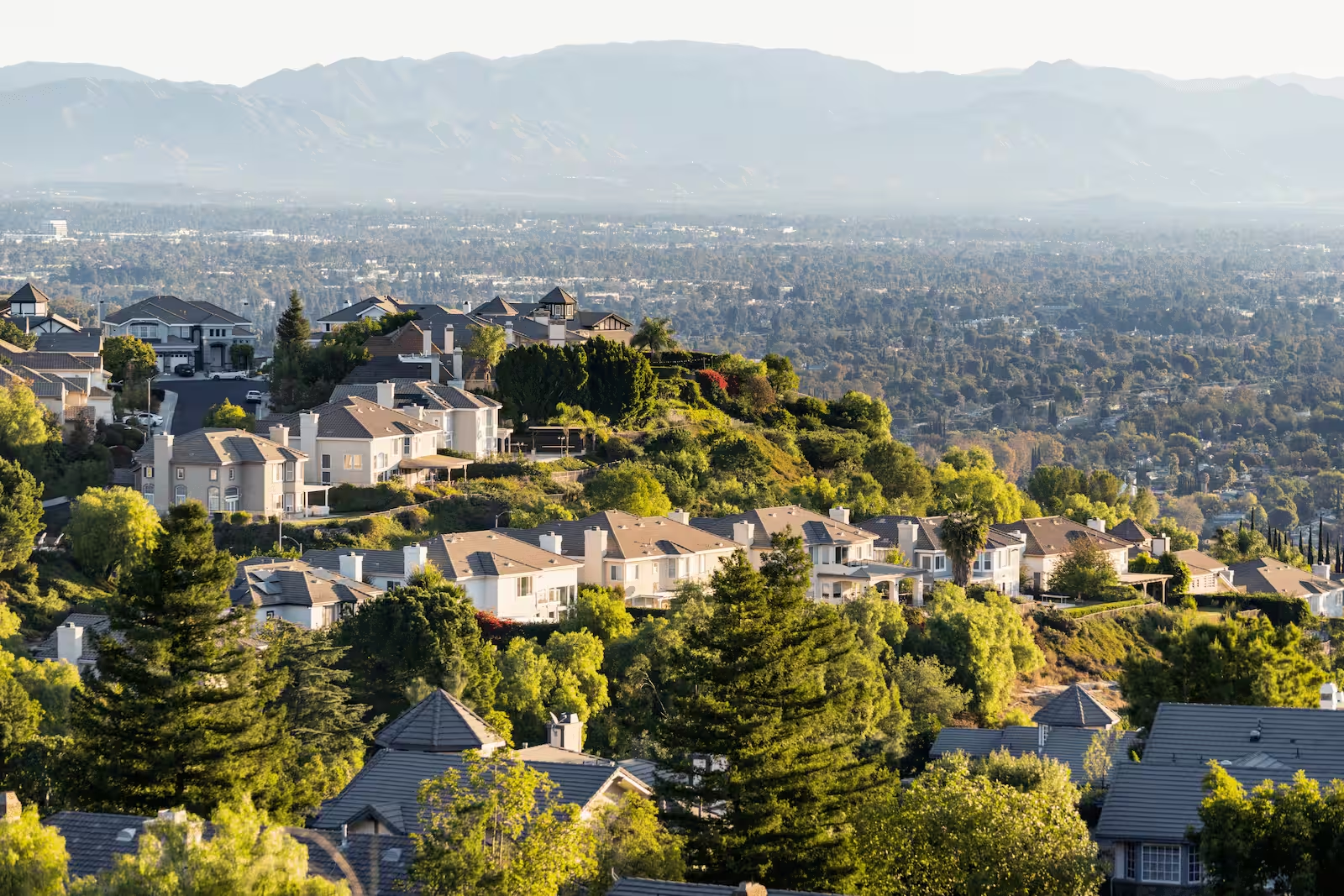

What You Need to Know About Bus Accidents in the San Fernando Valley
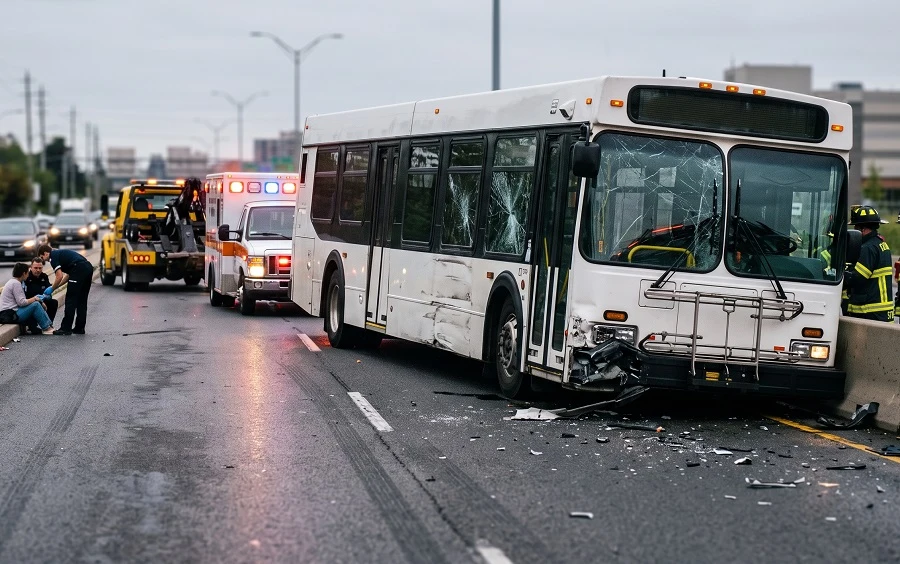
Thousands of Valley residents ride Metro Local and Rapid buses, LADOT Commuter Express routes, and yellow school buses every day, while charter and tour buses use the 101 and 405 to reach hotels, event venues, and Valley schools.
School bus-related crashes killed 110 people nationwide in 2024, per National Highway Traffic Safety Administration data compiled by the National Safety Council. The Federal Motor Carrier Safety Administration's Large Truck and Bus Crash Facts report tracks thousands of bus crashes nationwide every year. Most transit and charter buses, and many older school buses, still lack seat belts, so a hard stop or a side impact throws passengers into poles, windows, and each other.
A Bus Crash Raises Legal Questions a Car Wreck Never Does
A routine car accident usually involves one driver, one insurer, and a two-year filing deadline. A bus crash can involve a public agency, a private operator, several layers of insurance, and a filing clock that has nothing to do with that two-year window.
Multiple Parties Can Share the Blame
Our investigation looks well past the driver's seat:
- The bus company or transit agency: Did dispatchers push the driver to hold an unrealistic schedule? Was the driver properly licensed, trained, and screened before being put behind the wheel?
- The driver: Was the driver distracted, fatigued, or speeding to make up lost time on the route?
- The maintenance provider: Were brakes, tires, and doors serviced on schedule, or was a known problem ignored to save money?
- Another motorist: Did a passing car cut off the bus or force a sudden stop that threw riders from their seats?
- The manufacturer: Did a defective brake system, door mechanism, or steering component fail during normal use?
Public Buses Play by a Different Rulebook
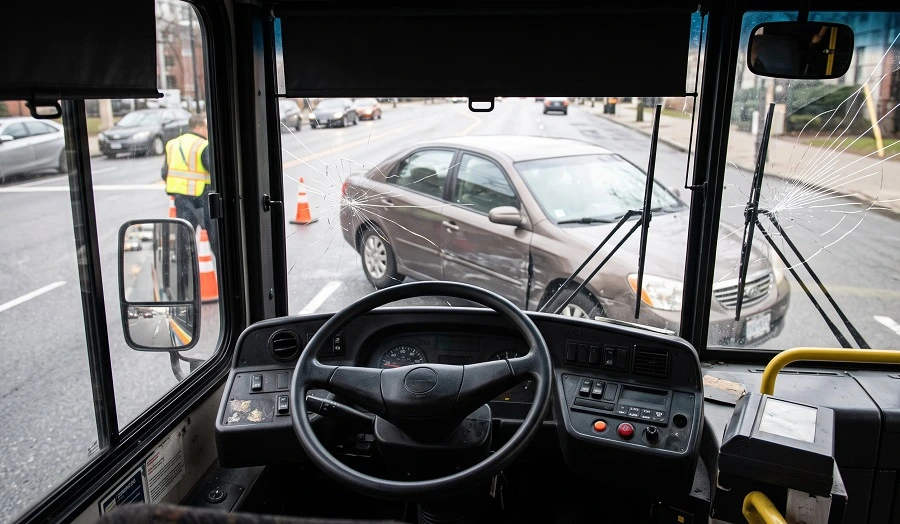
California's common carrier standard holds bus operators, public and private, to a higher duty of care than an ordinary driver owes another driver. That protection cuts both ways in terms of timing. A claim against Metro, LADOT, or a school district generally must be filed within six months under the California Government Claims Act, rather than the standard two-year statute of limitations window for most injury claims. Private charter and tour operators typically keep the full two years. We confirm which deadline applies to your bus before it becomes a problem.
Evidence That Disappears Fast
Bus systems collect data that a typical car never will, and most of it does not stay on file forever:
- Onboard camera footage from inside and outside the bus.
- GPS and telematics data showing speed, braking, and route timing.
- Driver qualification files, training records, and hours-of-service logs.
- Maintenance and inspection records for brakes, tires, and doors.
- Passenger manifests, farebox data, and post-crash inspection reports.
We send preservation letters the same week we are retained, so footage and logs, the kind of proof a bus accident claim depends on, don't disappear on a routine schedule.
Common Causes of Bus Accidents in the San Fernando Valley
Our cases usually trace back to one or more of the following:
- Driver fatigue from back-to-back routes and long shifts.
- Distracted driving, including phone use and handling fare disputes.
- Sudden braking or acceleration that throws standing passengers off balance.
- Worn brakes, bald tires, or faulty doors that went unrepaired.
- Wide turns and blind spots that catch pedestrians and cyclists off guard.
- Aggressive driving meant to make up time lost in Valley traffic.
Each of these factors calls for a different set of records and a different theory of liability, which is exactly what our investigation is built to uncover.
Common Bus Accident Injuries in the San Fernando Valley
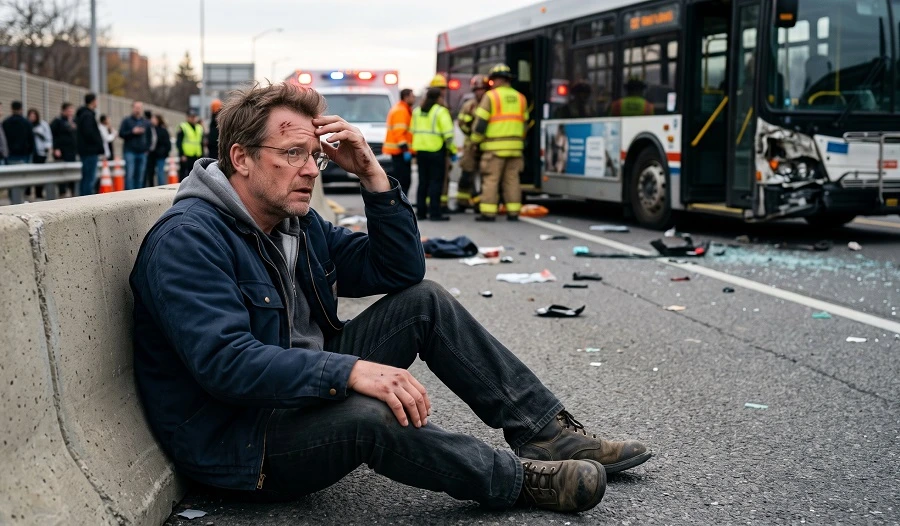
The size and weight of a bus mean that even a low-speed collision can produce injuries far more serious than a typical fender-bender. Because most buses do not restrain riders, the body absorbs the full force of a sudden stop or impact.
- Traumatic brain injuries from a fall or impact inside the bus.
- Spinal cord injuries and paralysis from being thrown against a seat or rail.
- Broken bones from falls during sudden braking or sharp turns.
- Deep lacerations from shattered windows or loose interior fixtures.
- Whiplash and soft tissue damage among standing riders thrown off balance.
- Fatal injuries to pedestrians or cyclists struck by a bus's wide turn or blind spot.
Even injuries that seem minor at the scene can require months of treatment, which is why documenting them early strengthens the value of a bus accident claim.
Compensation Available After a San Fernando Valley Bus Accident
Damages in a bus case often run much deeper than an initial offer from an insurance adjuster.
Economic Damages
- Medical care, both the bills already owed and the cost of treatment still ahead.
- Lost income and, where an injury limits future work, a real accounting of reduced earning capacity.
- Out-of-pocket costs such as prescriptions, home care, and transportation to appointments.
Non-Economic Damages
- Pain and suffering tied to the physical and emotional toll of the crash.
- Loss of consortium for a spouse or family affected by a loved one's injury.
- Punitive damages against a private bus or charter company that ignored repeated safety complaints (California law bars punitive damages against public transit agencies).
We build every bus accident claim around your actual losses, not the first number an insurance adjuster offers.