

What You Need to Know about Truck Accidents in the San Fernando Valley

The San Fernando Valley sees a high volume of commercial truck traffic every day, especially along major corridors like the I-5, I-405, and US-101. With so many delivery trucks, freight carriers, and construction vehicles on the road, the risk of serious collisions is higher than many people realize. These crashes often happen during heavy traffic, lane changes, or sudden stops, and they can lead to severe injuries for drivers in smaller vehicles.
Working with a San Fernando Valley truck accident lawyer who understands these local road conditions can make a meaningful difference in your case. Local knowledge allows us to identify contributing factors such as traffic flow, known accident zones, and common trucking routes. It also helps us act quickly to gather evidence, work with local agencies, and build a stronger claim on your behalf.
If you were injured in a truck accident in the Valley, taking early action can help protect your rights and preserve critical evidence.
A Truck Wreck Isn't Just a Bigger Car Accident; It's a More Complex Legal Fight
A collision with a commercial truck or big rig is fundamentally different from a standard car crash. The sheer size of these vehicles causes catastrophic damage, and the legal landscape is far more complex. Understanding these differences from day one is critical to building a successful claim.
Working with an experienced truck accident lawyer in the San Fernando Valley ensures that these complexities are addressed immediately and thoroughly.
Uncovering Every Potential Source of Compensation
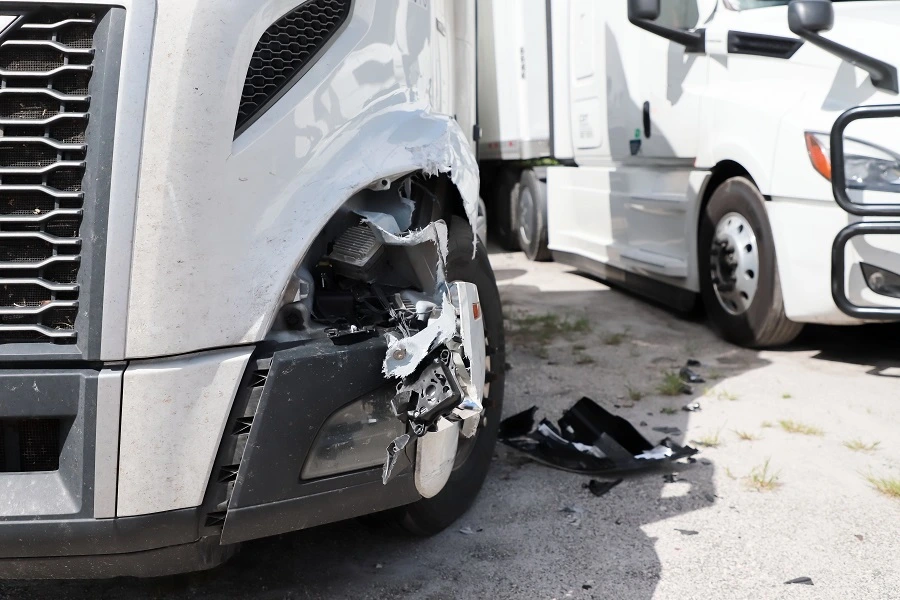
In a typical car wreck, the claim is usually against one at-fault driver. In a commercial trucking case, the net of responsibility is much wider. The driver is just one piece of a complex operational chain, and any link in that chain that failed can be held legally liable for your injuries.
This is why hiring one of our exceptional San Fernando Valley truck accident lawyer is so important. These cases often involve multiple insurance policies and significantly higher compensation potential.
This complexity is actually a significant advantage for your case. It means there are often multiple, well-funded insurance policies we can pursue for full compensation for your injuries, especially when they are catastrophic. An inexperienced lawyer might stop at the driver, leaving significant money on the table. We know how to trace the negligence up the chain.
Our investigation immediately expands beyond the driver to identify all potentially liable parties. We ask critical questions:
- The trucking company (motor carrier): Did they pressure the driver to violate safety rules or meet unrealistic deadlines? Did they fail to properly train or supervise their driver? Did they neglect to perform background checks?
- The cargo owner/loader: Was the truck overloaded, or was the cargo improperly secured, causing it to shift and leading to a loss of control?
- The maintenance company: Did they fail to properly inspect and repair critical systems like brakes, tires, or steering, leading to equipment failure?
- The truck/parts manufacturer: Was there a defect in the truck itself, such as a tire blowout or brake failure, that caused the collision?
For instance, in a case where a truck's brakes failed, we could not only pursue the driver for failing to control their vehicle but also the maintenance company if it signed off on faulty repairs and the trucking company for failing to ensure its fleet was safe.
Using the Trucking Industry's Own Rulebook Against It

The trucking industry is one of the most heavily regulated in the country, governed by a strict set of federal laws from the Federal Motor Carrier Safety Administration (FMCSA), as well as California's own Vehicle Code.
These rules are not just suggestions; they are the legally required "standard of care" for trucking companies and their drivers. A violation of an FMCSA rule is not just a mistake; it is powerful evidence of negligence that can be used to build an undeniable case for liability. Many lawyers who only handle car accidents are not familiar with this complex rulebook. We are.
We immediately subpoena and analyze the records that trucking companies are legally required to maintain. Our investigation focuses on finding violations in:
- Hours-of-service (HOS) rules: We scrutinize the driver’s electronic logbook (ELD) data for any sign of fatigued driving. Did the driver exceed the strict daily or weekly driving limits designed to keep tired truckers off the road?
- Drug and alcohol testing: We obtain records of pre-employment, random, and post-accident drug and alcohol tests to determine whether impairment was a factor.
- Vehicle inspection and maintenance records: We look for patterns of neglect, such as overdue repairs, repeat brake problems, or tire issues that the company ignored to save money.
Unique and Critical Evidence
Truck accident claims require fast action. Our skilled truck accident lawyers, whom San Fernando Valley residents rely on, will move quickly to preserve key evidence before it is lost or destroyed.
Trucks contain a wealth of evidence that passenger cars do not collect. We act immediately to send spoliation letters to preserve this data before the trucking company can erase it. This includes:
- The truck’s "Black Box" (Electronic Control Module), which records speed, braking, and other data
- The driver’s electronic logbook (ELD)
- Fleet maintenance and repair records
- Driver qualification files and training history
- Post-accident inspection reports
Investigating the Cause of Your Truck Collision
Our investigation focuses on proving how negligence led to your crash. We have experience with cases involving:
- Driver fatigue: Drivers pushing past their legal hours-of-service limits.
- Distracted driving: Truckers using phones or other devices while operating an 80,000-pound vehicle.
- Improper maintenance: Worn brakes, bald tires, or other equipment failures.
- Overloaded or unsecured cargo: Shifting or improperly loaded cargo that causes the driver to lose control.
- Inadequate training: Trucking companies putting inexperienced or poorly trained drivers on the road.
- Speeding or aggressive driving: Truckers driving too fast for conditions to meet tight deadlines.
Each of these factors requires detailed legal analysis that our skilled truck accident lawyer in the San Fernando Valley has the advanced knowledge to handle.
Fighting for the Lifelong Resources You Need After a Catastrophic Truck Wreck

The sheer physics of a collision involving an 80,000-pound commercial truck means injuries are rarely minor. They are often catastrophic and life-altering, requiring a legal strategy that looks far beyond the initial hospital bills.
An insurance company's first offer will never account for the true, lifelong cost of a severe injury. Our firm fights to secure the financial resources you need to cover current and future medical expenses.
Catastrophic Injuries Demand a Higher Level of Proof
Truck accidents frequently result in a specific class of devastating injuries that have permanent consequences. These aren't just medical conditions; they are life-altering events that require complex, long-term care plans.
Proving the full extent of these injuries requires more than just submitting medical bills. It requires building a comprehensive, forward-looking case that demonstrates the need for lifelong support. For each type of injury, we work with a network of medical and financial specialists to build an irrefutable case for damages.
- Traumatic brain injuries (TBI): We work with neurologists and life care planners to project the costs of ongoing cognitive therapy, in-home assistance, and potential loss of career.
- Spinal cord injuries and paralysis: These injuries have profound, lifelong consequences. We work with life care planners and physiatrists to project the lifelong costs of 24/7 attendant care, home and vehicle modifications, wheelchairs, and ongoing physical therapy.
- Amputations: Our damages model includes the cost of high-quality prosthetics, the necessary replacements and maintenance over a lifetime, and the psychological impact of losing a limb.
- Severe burns or internal injuries: We account for the immense pain and suffering, the cost of multiple reconstructive surgeries, and the long-term risk of complications.
We Fight for Every Dollar You Are Owed

While the categories of damages are similar to car accidents (economic and non-economic), the scale and scope of a truck accident case are vastly different.
Our experience in these specific cases means we know where to look for damages that less experienced lawyers might overlook.
Economic Damages:
- Lifelong medical care: We don't just ask for current bills. We present a detailed "life care plan" from a medical expert that outlines every anticipated medical need for the rest of your life.
- Loss of earning capacity: If you can no longer work in your chosen field, we hire a vocational expert to calculate the total value of your lost career earnings, not just your current lost wages.
- Out-of-pocket costs: We meticulously document every related expense, from prescription co-pays to the cost of transportation to your many medical appointments.
Non-Economic Damages:
- Pain and suffering: We use expert testimony, as well as compelling narratives from you and your family, to demonstrate to a jury the true, human cost of your daily pain and physical limitations.
- Loss of consortium: We help your spouse file a claim for the loss of companionship, support, and intimacy that results from a catastrophic injury.
- Punitive damages (when applicable): In cases where the trucking company showed a conscious disregard for safety, we will aggressively pursue punitive damages. These are designed not just to compensate you, but to punish the company and deter it from harming others in the future.